
Doctor Who: The Daleks' Master Plan (Eps 1-3)
Transcript
It is now time for Ant and Nick to Press Play.
Speaker B:Hello everybody and welcome to another edition of Ant and Nick Press Play. I'm Nick.
Speaker A:And I'm Ant, and welcome back everybody. It's been a long time since we've been in, well, not the same room together, but at least not speaking over each other like mad scientists.
Speaker B:Yeah, um, yeah, exactly. Welcome back to Ant and Nick Together.
Speaker A:Yeah, um, before we get into what we're going to discuss today, let's talk about a few weeks ago we did the, what my wife called, unlistenable podcast.
Speaker B:Oh no, I agree. Yeah, and I'll tell you why. One reason is because although our voices were panned left and right, yeah, technology My technology is such that when I've got one Bluetooth earphone in, it plays both at the same time. It compensates for the fact you've only got one in by going, oh, I'll just play both then.
Speaker A:So I can't imagine it was much fun for people, but I'm sure maybe some people managed to get it to work, and left and right. Maybe we'll release them as left and right individual. I don't know.
Speaker B:I was thinking maybe, yeah. But it's actually quite— I mean, I've listened to it a couple of times with both playing at the same time.
Speaker A:Yeah, I have.
Speaker B:And I've been following both of the conversations. It's, yeah, I haven't slept very well since.
Speaker A:Yeah, and if I'm being honest, it made me feel sick. And I thought there was some good stuff in there that we both definitely talked about. The episode itself is crap, uh, that's not a spoiler.
Speaker B:Yeah, I actually, listening to yours, you were a lot more calm and measured than I thought you'd be. I thought you'd be like just tearing your hair out.
Speaker A:Well, it's been a long time since I've watched it, and what I realized was, as I went through it, there are some good people in that episode.
Speaker B:Also, it goes very quickly as well. It just, it was over as soon as I'd settled into it, really.
Speaker A:I think some of it's a result of the most recent Doctor Who not being very good, and that always felt like a slog, whereas that, yeah, like you said, it flew by. It was a complete contrast to some of the recent Doctor Who stuff.
Speaker B:So it's, um, it's strange. Not that I particularly liked it anyway, but it's strange looking back now with a bit of a sour taste in my mouth at what I thought were the glory years that couldn't be bettered.
Speaker A:I'm like, oh, Yeah, I think I've said this before, but I remember reading a forum post on, um, was it, what was it? What was the message board?
Speaker B:Oh, Gallifrey Days, was it?
Speaker A:Yes, that was it. And I remember loads of people saying back when it was Tennant series, Second Series, they were like, this is as good as it gets. This is the golden era. And I was like, nah, it'll continue. It'll carry on. Like I said before, I loved Matt Smith and I loved Peter Capaldi as well. So there was still some good stuff in the tank, but Yeah, I recently—
Speaker B:I liked them as Doctors, and I liked— I didn't particularly enjoy it as it was happening. I didn't enjoy the Moffat era as it was happening, but now I can look back and just think, oh yeah, that was pretty cool. And I couldn't imagine any other actors playing those parts, you know. And I can dip back into it every now and again.
Speaker A:Yeah.
Speaker B:But I think, yeah, Doctor Who is one of those weird things that works better in retrospect. It just always seems to— all these eras are being re— Appraised and, um—
Speaker A:Well, it's like what we're going to be looking at today, isn't it? Um, something quite special, actually. Yeah.
Speaker B:So basically what we're going to do is we're going to watch 3 episodes of Doctor Who, 2 of which have been found, presumed missing, but found, uh, within the last month or so. So it's still almost topical.
Speaker A:Almost is.
Speaker B:I think we might be the last people ever to do a commentary on these because there's been a lot. But, um, episodes 1 and 3 of The Dalek Master Plan, which is a very sought-after epic 12-part adventure, have materialized. So there was previously 3 out of 12 survived, and now we've got 5 out of 12. Episode 2 was found about 20 years ago because I remember it. I remember it being on in the issue of Doctor Who Magazine that announced Christopher Eccleston as the Doctor. Yes, it was. He was on the front. And they picked a really bad picture of him.
Speaker A:Yeah, very long time ago. It's great that it's being pieced together, and I'm— there is still quite a bit missing, which is a shame.
Speaker B:There is, but it's nice to have the, the 1, 2, 3, have at least the— be able to see things sequentially up to a point.
Speaker A:Yes. Um, but apparently there may be more, right?
Speaker B:There may be more. So the thing is, so this organization— I've been following this because you're not particularly active on Twitter, are you, I guess?
Speaker A:No, no, exactly. So you probably know a bit more than I do.
Speaker B:Yeah, and I listen to a few podcasts, so shout out to the Doctor Who Missing Episodes podcast, really good. Uh, Something Who podcast, the Dalek 6388 channel, um, and various other Doctor Who accounts and podcasts that I listen to, but they're particularly good. They know a lot about the minutiae of the actual system of making copies and, you know, where they went in the world and stuff. I can't keep up with all these facts, but it's very, very interesting to hear people people talk about.
Speaker A:So there's a lot of private collectors that have, have this stuff, isn't there? So yeah, somewhere people are just holding on to these episodes.
Speaker B:That's, that's potentially—
Speaker A:yeah.
Speaker B:So the thing is, in, in previous years, I think people have had an image of, of Doctor Who fans sitting there hoarding stuff to be spiteful.
Speaker A:Yeah.
Speaker B:And I know that because I, because I've also maybe thought that at one point, but I think it's actually more complicated in that people have collections of films.
Speaker A:Yeah.
Speaker B:A lot of these collectors maybe are also hoarders or like have hundreds of, you know, thousands of films. Yes, of films. Don't necessarily know what they've got, don't necessarily know what's missing and what isn't. Um, yeah, and also are very, very protective of what they've got. Uh, and so this charity Film Is Fabulous have been going and trying to trying to secure collections and preserve them.
Speaker A:Yes.
Speaker B:For people, for older collectors who are now sadly passing away, so that they're not— these things aren't just thrown into a skip, which I'm sure lots of collections previously were. Because what would you, if you don't know about films and stuff, what would you do if you've got to like sell a house really quickly? Or, you know, it's a sad state.
Speaker A:Yeah, you just throw it away.
Speaker B:Yeah.
Speaker A:I'm confident that we'll get more, but hey, We've got 5. That's good. Yeah.
Speaker B:So what they also said, which I agree with as well, they obviously, they're doing their thing. They're working with these collectors. They're going through all the legal processes. So they've said before, we're not bothered about anniversaries, special days, particular episodes. We're not going to tell, you know, if we find something, we find it and it'll come out. We're not like, we're not going to expedite things just because it's Doctor Who. We're going to treat all these things equally.
Speaker A:Yeah.
Speaker B:The Morecambe and Wise has turned up recently. That was thought lost.
Speaker A:Oh, has it?
Speaker B:Yeah.
Speaker A:That's great.
Speaker B:So there's all these other things that come up. Some collections include archive material that's presumed missing. Other ones probably don't. I think in this particular collection, there was other— there was maybe 4 other episodes of Doctor Who that do exist.
Speaker A:Yeah.
Speaker B:But even so, it's interesting to think that, you know, in certain cases, there may be better copies in somebody's collection.
Speaker A:As Matt said, better quality of it that they can keep and use.
Speaker B:So it's always useful.
Speaker A:Fingers crossed.
Speaker B:But yeah, so Film Is Fabulous is a charity which accepts donations, so if you feel that way inclined, do support them.
Speaker A:Yeah.
Speaker B:Because they're a very worthy cause.
Speaker A:Please support them, because otherwise we wouldn't be able to do this, would we? You know, and we wouldn't be able to be watching these episodes today without all the work for everybody that is looking for these missing pieces of, well, history really. And it is history. William Hartnell's era is one of those that people look back on very, very fondly. Even now, you know, they always talk about, you know, the First Doctor. Yeah, I'm really, really glad it got found.
Speaker B:The more Hartnell, and Troughton to be honest, but the more Hartnell is found, the more I think his character's being reappraised. and his companions are being reappraised, because he's still being judged on things like The Three Doctors and The Five Doctors and Twice Upon a Time, you know, as this grumpy, crotchety old man. Angry.
Speaker A:Yeah, and I do want to address that before we start watching the episodes, right? Because I've been thinking about this, uh, myself. You know, obviously we joke about it, and we joke about how we get stuff wrong, but what we have to realize here is these episodes were recorded live. Right? Or a lot of them were, you know, so yeah, or as live, yeah. So, and they didn't really have the ability to kind of go back and edit and change things. So give the guy some slack. We've all seen what can happen with EastEnders and Bradley and things like that where it all goes horribly wrong and—
Speaker B:How's Adam?
Speaker A:They say the wrong thing and I just thought that's part of the charm, it really is.
Speaker B:Also, frankly, we've seen enough car crash moments on theatre stages as well.
Speaker A:We have indeed, haven't we?
Speaker B:Where people have had to start again and, you know, and then still got it wrong.
Speaker A:So we all know how theatre can be and how it can go horribly wrong. Not that we're saying anything we've ever done has ever gone horribly wrong. It's all been perfect. Always. Even when we forgot our lines that time.
Speaker B:It's exactly perfect. And this edit doesn't take me weeks and weeks and weeks to get any semblance of language.
Speaker A:Yes.
Speaker B:Base.
Speaker A:Yeah. Exactly.
Speaker B:And structure.
Speaker A:Yeah. Let's, um, let's talk. Let's watch William Hartnell at his finest.
Speaker B:Let's do it.
Speaker A:Episode 1.
Speaker B:I'll play it.
Speaker A:Grab it up.
Speaker B:It's kind of hard to, um, to time these very well, isn't it?
Speaker A:Yeah, because I mean, I'll do 1, 2, 3. I'm on 0 at the moment. Nightmare Begins.
Speaker B:Um, have you got it paused? Like, are you actually on it?
Speaker A:Yeah, paused on 0.
Speaker B:I tried to do that before and it didn't, it didn't really work very well. Oh, shit. Now I can't do anything with it. Oh yeah, because I'm covering up the Roku thing.
Speaker A:That's why. So on the count of— are we doing this on the count of 3? Yeah.
Speaker B:1, 2, 3, and then go is when we do it.
Speaker A:Okay. 1, 2. Okay. Okay. Okay.
Speaker B:Let's press play on The Daleks' Master Plan: The Nightmare Begins. Three, two, one, play. Right, Doctor Who theme is coming up. You know, I was testing this before, and my wife said, "Are you printing something out?" Because all she could hear was the dot matrix sound. Yeah, yeah. I was like, "No." What? You scanning something?
Speaker A:No.
Speaker B:It's the Doctor Who theme tune.
Speaker A:Yeah, if you play it on a cassette—
Speaker B:Groundbreaking, actually.
Speaker A:It does sound a bit like dial-up.
Speaker B:I think it's one of the most perfect pieces of music ever. And I know I picked the Doctor Who theme as one of our worst, one of our previous episodes, but not that particular version of it. That is absolutely perfect. And I love the fact that they just did it all on tape and literally glued it together.
Speaker A:Yeah, look at that. Written by Terry Nation. Obviously has to be written by Terry Nation, doesn't it? Yeah.
Speaker B:How many times have you watched this? Just once.
Speaker A:Just once. Just once. I didn't want to spoil it, to be honest. I thought once through, and then obviously I'll probably end up watching it a few more times. Look, he's got my hair that I had at uni. It's great.
Speaker B:Yeah, that's true. When I first met you, you had Hartnell's hair.
Speaker A:Yeah, Hartnell's hair.
Speaker B:I don't think he's got a bleach streak in it.
Speaker A:55 years old. He's 55 years old here, or in that region. 56, 57 maybe?
Speaker B:57, yes, Mark.
Speaker A:Which is incredible.
Speaker B:I know, but I think about this a lot, and the fact is his character is older. So I know he's got a bit of a wrinkly face, but his makeup and his hair and the way that he acts is making him look older than he actually is. If you see him like in rehearsals with his wig off, he doesn't look quite as old.
Speaker A:Yeah.
Speaker B:He looks as old as somebody who was born in 1908 would, you know.
Speaker A:Yeah, he does. He's got that look about him. But yeah, if you watch him in interviews around the time, he looks very suave. He dressed very suave. I've got his, um, his daughter or his granddaughter's book, the one that you bought me.
Speaker B:Oh yeah.
Speaker A:Some of the pictures in that. Yeah, yeah, fantastic pictures of him looking really handsome. Yeah.
Speaker B:So what did you know about this story or this episode before it came back?
Speaker A:Not a lot. Not a lot.
Speaker B:You know much about the overview?
Speaker A:I hadn't watched the— even though I knew about it, and I've watched a lot. I've watched a lot of Harnell, as you know, but I haven't watched this because it's so much of it's missing.
Speaker B:Yeah, I guess so. I think I only really know about it because of because I'm listening to podcasts where people have discussed it, and I've sort of pieced it together from there, or little interesting videos about it. But Um, but in terms of— because there's people out there who've been listening to the soundtrack, because obviously, amazingly, the soundtrack of every episode of Doctor Who exists.
Speaker A:Yeah, exactly, it does. And that's how they can animate some of the stuff and, and do all that. Yeah, crazy stuff. There was one recently with the, um, Toymaker, wasn't there? Um, we've seen that CGI.
Speaker B:I'm not quite too fussed about the animations. It's weird, it's And I, I don't particularly— I know you can get various versions of the soundtrack where it's narrated or not narrated or condensed or whatever, or animated, but I'm not particularly interested, and I'd much rather watch what was actually happening.
Speaker A:Yeah, look at that. Look at these costumes. What? Interesting, aren't they?
Speaker B:These 2 characters, there was no visual evidence of them. until this moment.
Speaker A:Oh really?
Speaker B:People didn't really know. They obviously knew who played them and everything, but they didn't know really what they were styled like or—
Speaker A:No.
Speaker B:So there's all these things that people have been, um, people have been trying to research over the years about exactly— because people, you know, camera scripts exist.
Speaker A:Yeah.
Speaker B:Off-air clips exist, telestamps exist, some behind-the-scenes photographs exist, but not for everything. So there are There are some really interesting mysteries that, you know, people have basically don't really know for sure how certain things were done. Certain things in these 2 episodes are included in that, and there's been a lot of things answered about exactly how things were staged, what— how the effect was, what we could see, what we couldn't see, who played who.
Speaker A:Yeah. Yeah, I mean, very interesting. I mean, to be honest, that effect there of fading in the screen is quite a good effect for the time, to be honest.
Speaker B:Yeah, this particular scene has been speculated on a lot about exactly what you could see. Was the— could you see the interviewer? Was it— yeah, what were they doing while this was happening? They were— those 2 actors were doing— were offstage doing that live.
Speaker A:Oh wow, that's impressive. Yeah, so it's just another camera. Yeah, yeah, okay. The, um, the Steve Jobs looking guys, they're interesting, aren't they? With the bald heads and the polo shirts.
Speaker B:Well, do you know what? A lot of the publicity for these early episodes involved William Hartnell standing with those men. because it made a good image, but it didn't really help.
Speaker A:Yeah, it does.
Speaker B:Didn't really help in what happened in the episode other than that. But yeah, they really, they latched onto that bald guy, I think.
Speaker A:This guy's got a dodgy eye, I have to say.
Speaker B:He has. The actor's got a lazy eye or a—
Speaker A:Oh, has he? Now I feel bad. Yeah, he's not acting it. He's just got a lazy eye. Okay.
Speaker B:He's also in the Do you know the, uh, The Invasion, the Cybermen episode? It was the first, um, one to be animated. A couple of episodes were animated, and I got that when we were at uni.
Speaker A:Yes, I remember that came out on DVD when I was at uni.
Speaker B:So he's in that one as well as the, like, the Cyberman, um, the guy that's sort of with on their side, you know. But also of the future. Very good actor. So firmly laid.
Speaker A:It's a slow start, isn't it? I have to say.
Speaker B:Well, yeah, but there's a lot of world building to do.
Speaker A:Yeah, there is. There absolutely is. And I get because of the way these serials worked and the way these stories worked, they were spread out over so many episodes, they could afford the time, couldn't they? Really? Yes.
Speaker B:Yeah. This, um, the director of this is very well respected. in the Doc 2 circles, Douglas Camfield, in his sort of inventiveness with what he could do with the limitations of the technology. So there's a lot of particular shots where cameras are moving about, there's a lot of things that are pre-filmed and then cut in so they don't have to keep stopping.
Speaker A:Yeah, I have to say, they've been quite creative with the cameras. Yeah, I have to say they are.
Speaker B:And of course, this is the first appearance of Nicholas Courtney, later to become the Brigadier. Yeah, looking very dashing.
Speaker A:He always did, didn't he? Yeah. Have you got any more bright ideas?
Speaker B:All that will happen is I'll hit one of those spiked plants.
Speaker A:I nearly fell on one before.
Speaker B:I can hear your, um, I can hear your telly through my earphone a little bit. So I can tell that we're not perfectly synced, but—
Speaker A:I thought we would be, but that's fine. We must be—
Speaker B:I think it might be just a second out or something.
Speaker A:We must be as perfectly synced as we can be.
Speaker B:For these ones, I like to put the audio of the episode separately as an actual track in itself, you know, so we know where we are.
Speaker A:It just makes it hard though, doesn't it, if you're hearing certain bits as we're listening in and then The edit, I imagine you've got to edit it out and silence it a bit. Should work.
Speaker B:Now, obviously, I've been listening to, like I say, I've been listening to a lot of podcasts where people have been going into the finer detail of this, and a lot of knowledgeable people who've been studying this episode all of their lives. Um, we are not those people.
Speaker A:No, we're not.
Speaker B:In fact, you know, one of my favorite Doctor Who podcasts is one called A Wheezing Groaning Sound. Which 3 people, kind of comedian-y— yeah, sorry, they are comedians, sorry— will just talk about whatever classic episode takes their fancy.
Speaker A:Yeah, well, I think that's the best way.
Speaker B:But so they go through them just in sort of random orders, but I like the fact that they, they're not really up on a lot of the detail. of Doctor Who. So a lot of it is just them. There's a lot of in-jokes and a lot of dicking about and a lot of tangents and stuff.
Speaker A:Well, as there should be, even if you know a bit about it.
Speaker B:I think, oh yeah, I like, I like the confidence of people that don't really know a lot about it, that have a broad overview of, um, these stories.
Speaker A:I mean, it's great to have one, isn't it? It's great to have one that's Deep diving, and you know about it. But it's great to just watch and go, "What the hell is going on?" Yeah, exactly.
Speaker B:Or just, or just see it for what it is without going, "Oh, and actually this shot was very spooky." Ironically, I'm gonna say this shot, this clip did exist previously because this was pre-filmed this particular death.
Speaker A:Oh, okay, yeah.
Speaker B:Was, um, spoiler, because some of these things were taken out for things like Blue Peter or other, other programs. They were sort of cut out, so they existed within the context of that. Um, so I remember that clip coming up on, in the early '90s, uh, around the 30th anniversary, there was various little clip shows and things where that was shown, and a couple of other ones from this.
Speaker A:We can't silence the Daleks, can we? I mean, They, they're loud. I can hear them through yours. I can— I'm sure you can hear them through mine. They are— yeah, they are loud.
Speaker B:I really like these era Daleks. I don't think they've really been bettered. And yeah, there's just something so good about them. There's something really good about the voices.
Speaker A:No, I've got a replica of one of these at work.
Speaker B:Yeah, the voices are great. I even have got a soft spot for the ones, the very early ones, that didn't have the, the slats on the collar. Yeah, and have those things going down that just have the 2 bands across. But yeah, I just, I love it so much. And I love the fact that in these early days, I like looking at these trying to sort of not think about the future of Doctor Who, trying to think of it in the moment. Like, they didn't really— obviously they didn't know how it was going to progress.
Speaker A:They didn't know in this first series. They didn't know what they were going to do.
Speaker B:I like this kind of naivety almost. Of these early Doctor Who's, I like yeah. I like the fact that certain things like the Daleks come back and they always sound slightly different, or they've always been they've been painted in a different way for some obscure reason.
Speaker A:But it's just classic Hartnell there, my dear, my dear.
Speaker B:Oh, he's so good. So this companion Katarina. Yes, this child. With these 2 episodes coming back, a big portion of her performance has returned because previously we didn't really know anything. She appears at the end of the previous story, which is completely lost. She was— spoilers— but the clip of her death in episode 4 existed, I think, was on something like Blue Peter or whatever.
Speaker A:Yeah.
Speaker B:But really, she didn't— we didn't really know who she was. And she's— she comes from Troy from the previous episode, so she's quite naive and wide-eyed. Um, and they obviously decided that that wasn't really good enough to have a companion that was— that didn't really know a lot of modern things.
Speaker A:Strange place.
Speaker B:Oh, I'm very happy to see that Actually, she's been— with these 2 episodes, she's been reappraised. She was already slightly reappraised in episode— when episode 2 came back, but she's not— she didn't have as much to do in that one, I don't think. But I think she's great. I would have liked her to stay, but I get, I get that the impact of her dying and everything.
Speaker A:But well, he needed death.
Speaker B:Yeah, she was always— when I was younger and looking at old— sorry, looking at like annuals or old lists of things She was the— she was one of the companions that was— that you learned in that list of companions. Yeah, but she always seemed so unreachable, you know. It was like, oh, it's like, oh, and there was a companion called Katarina, and oh, but we don't really know. There was a few photos of her maybe in an annual. So I've always had a bit of an interest in her because, because she would just seem like a really interesting curio in the, in the history.
Speaker A:Did the actress Did the actress do much else? Did she do much else?
Speaker B:I'll be honest, I don't think so, really.
Speaker A:No. But then, how many do? Yeah, you're right. How many people just don't do—
Speaker B:she died quite young, sadly.
Speaker A:Oh, really?
Speaker B:In the '90s, um, I believe. So it's just sad that she, she hasn't actually seen any of her performance come back.
Speaker A:That is sad. That is really sad. I'm sure she would have watched it at the time, but yeah.
Speaker B:But people have been particularly interested in William Hartnell's— oh well, Hartnell's portrayal, Hartnell's relationship with Katerina and his— that sort of twinkly, grandfatherly, protective kind of thing that he does, which gets forgotten a lot. I saw somebody probably on Twitter say a while ago, in the old man, the doctor, in received wisdom about Doctor Who, the first doctor is the serious, crotchety, grumpy one. And the second doctor is the really sparkly, funny, clowny one. But actually, it's kind of the other way around.
Speaker A:Yeah, I've always thought that. I've always thought Hartnell, you'll see, really care.
Speaker B:Hartnell is more a sort of laughing, giggly kind of person. But whereas Troughton— and again, this is all sort of based on Troughton's subsequent appearances, Three Doctors, Five Doctors, Two Doctors, where he— they sort of overdid this sort of, um, you know, the cosmic hobo, the sort of clowny, silly, you know, Doctor. But in his actual episodes themselves. Yeah, there's a bit of tomfoolery, but it can be very dark and serious and straight sometimes.
Speaker A:Yeah, yeah, absolutely.
Speaker B:Whereas Hartnell's always like—
Speaker A:Well, especially here, look at his hair, like a clown. What's this all about? Great Scott!
Speaker B:Exactly. And that's something that people just didn't know about, the fact that he's had a You know, a little skirmish with Brett Vian to get the keys to the TARDIS. He's been roughed up.
Speaker A:Oh God! It's like when I've been out on a night out. Oh my God! They're cracking in the door. What's that noise?
Speaker B:I love the the sound effects of this era. I love the music and the sound effects of this era as well. They're so strange and they're so.
Speaker A:Yeah.
Speaker B:Inventive. Um, when you think back of how these things, the imagination that went into creating these things from odd sounds.
Speaker A:From scratch. Yeah, exactly.
Speaker B:You know what? I've often thought, now we've not mentioned this really on this podcast, but you and me had, uh, a musical project at university.
Speaker A:Yeah.
Speaker B:Which is still ongoing. Still going. Uh, but, um, where we made songs and sounds and beats out of all vocal sounds, wasn't it? All because we, we didn't have any equipment to actually— we didn't have any.
Speaker A:Yeah, so we just utilized our voices and sounds.
Speaker B:Yeah, we cut them up and we stretched them and everything. So I've got a real understanding of what the Radiophonic Workshop did, um, and how you can get sounds out of something that you wouldn't expect to get sounds out of.
Speaker A:Yeah, very fun. Very fun doing all of that. I find, I mean, music's fun anyway, but definitely with your voice and making sounds out of nothing essentially is really fun.
Speaker B:Yeah. And as Audacity has progressed, it's become a lot easier. In a way, it's become too easy. And I've missed the challenge sometimes of making a really weird sound out of something.
Speaker A:Especially at the moment when the AI is so prominent. I know we're going off on a tangent, but AI is so prominent. It really makes me a bit sad when I go, I think back to what we did and we were doing songs with our voices and stuff. And now everybody and their dog seems to be able to make a song. Yeah. Not great songs, of course, but—
Speaker B:No, they couldn't make the songs like we did.
Speaker A:That's true. Very true. I'm not, I'm sure there's a use tool for all of that. There absolutely is. But I think, yeah, it makes me a bit sad. Very sad. Yeah.
Speaker B:I'm drinking some rum and Coke at the moment.
Speaker A:I'm just drinking Pepsi.
Speaker B:I decided to treat myself.
Speaker A:Oh.
Speaker B:It's not the weekend yet.
Speaker A:I know it's not.
Speaker B:I've got Pepsi Max Cherry, and I've got some Old J Cherry Rum. So I'm overdoing the cherry.
Speaker A:I mean, not that I'm old enough to get a serious hangover from drinking one, but I've certainly, as I've got older, realized that drinking alcohol on a school night, as it were, or a work night, is not conducive.
Speaker B:Yeah, weird, innit? When I think of what we did back in the uni days, how little sleep we got and how much drink we had. God.
Speaker A:Even now, I've been staying up a bit later, just, just so I have some time to myself these days, in a good way. And even that I find difficult. If I stay up and it's only like 11 o'clock or so, but even that I find quite difficult.
Speaker B:I've got a real thing with, with beer making me tired.
Speaker A:Oh yeah, it's quite heavy, isn't it? So yeah, it does make you tired.
Speaker B:I can't— every so often you get on that, on a little nothing where you can just have lots of pints and you're like, oh, I'm really in the, in the, in the zone with it, and like I'm on a roll with it. But a lot of times I'm just like, bit tired now.
Speaker A:Yeah, same, especially alcohol, because it's heavy, really heavy.
Speaker B:This magnetic chair that Brett Vian's strapped to, um, is something else that people didn't know about. For years people have thought he was sat in the chair in the distance. the wooden chair and that it was just magnetized to that. But no, they've actually created a whole special chair.
Speaker A:Magnet chair.
Speaker B:I hate to see anyone die through stupidity. That's a very good look, that Space Security Service uniform.
Speaker A:Yeah, I thought so. It's very, it's a very modern Seventh Doctor. A little, you know, the newer Seventh Doctor outfit he wears.
Speaker B:Yeah.
Speaker A:Yeah. Kind of. Kind of. Maybe it's just because it's in black and white. I'm like, yeah, kind of dirty. I think the dirtiness is what more makes it, isn't it? I love a Doctor that has an outfit that looks dirty like that and looks like they haven't really cleaned, but still professional. I'd love that. A little bit rugged and— because Eccleston had that, you know, his coat looked a bit like it was had seen better days and stuff like that. I don't need—
Speaker B:Tom Baker had that as well.
Speaker A:Yeah, I don't need my Doctor to be a fashionista. Not that I'm being critical of any particular Doctor.
Speaker B:I'm still annoyed that, um, I'm annoyed at the 2 extremes of the 13th and 15th Doctor's costumes. Yes, clothes that I really wanted Jodie to have more variation. Um, yes, and I thought I wanted Ncuti to calm down a bit and have a, have a what they call a silhouette.
Speaker A:Well, she didn't. He didn't at all. And, and I get that they just thought it was fun, but I think they lost all understanding of what makes Doctor Who Doctor Who and the Doctor the Doctor.
Speaker B:I'm not saying have a uniform, obviously, like the '80s, like Peter Davison sort of thing, but you have a, as you say, a silhouette.
Speaker A:Have something that you wear Not all the time, but it's expected things you'll probably be wearing.
Speaker B:I thought you said cigarette for a second.
Speaker A:Have a cigarette.
Speaker B:Have a cigarette. Just hold a cigarette.
Speaker A:The vaping Doctor.
Speaker B:Well, actually, William— well, the first Doctor was the only Doctor to be seen smoking on screen, wasn't he?
Speaker A:But it was the time, wasn't it?
Speaker B:A little puff of the pipe. Which, um, you would think that, I mean, the Third Doctor would have suited having a cigar every now and again, I think.
Speaker A:Oh yeah, he, he looked like he probably did have cigars, but we just didn't see it.
Speaker B:The Fourth Doctor, I think, genuinely had fags in his pocket the entire time. For as soon as the cameras stopped rolling, probably a bottle of gin as well. Oh shit, it's the end of the episode.
Speaker A:Yeah, I mean, they're not long episodes, let's be honest.
Speaker B:They're not. So what's happened? So are we gonna have to restart, or is your one— is your next episode gonna start?
Speaker A:It's gonna go next episode. It's gonna go next episode, so we're good. We're good, aren't we?
Speaker B:Okay, yeah, I think so.
Speaker A:So I'm 3, 2, 1 online. This next episode— there we go, starting. This next episode, of course, has been recovered. For a long, long time.
Speaker B:Yeah, 20 years. And this in itself answered a lot of questions because we haven't talked about the actual plot of this, but never mind. But there are going to be some Daleks.
Speaker A:The Daleks are there, basically.
Speaker B:Yeah, the Daleks are involved in an interplanetary delegation that's going to take over the universe, yada yada. So there was an episode before The Mythmakers, which was a standalone episode, which is another curio that I was always fascinated with.
Speaker A:TV license, that, isn't it? Like Daleks at the door. TV license, come round.
Speaker B:Yeah, do you know the Mission to the Unknown, that episode?
Speaker A:Yes.
Speaker B:So as a standalone that didn't have William Hartnell, it was the only episode of Doctor Who that hasn't had the Doctor in it at all, I think. And it's been recreated several times in animated form or in— there was a— did you see when that university refilmed it as part of their course?
Speaker A:I didn't know. Did they?
Speaker B:Really?
Speaker A:Oh, no, I've seen that.
Speaker B:The university is UCLan, but I can't remember what that stands for.
Speaker A:Well, that stands for probably University of Lancashire, let's say. I don't know.
Speaker B:But, um, yeah, I really don't know. But yeah, UCLan. But they, yeah, as part of their course, their media course, they, they looked into old, you know, '96 telly, how things were done, and they, they chose that episode to refilm.
Speaker A:Oh, wow.
Speaker B:And all the students did acting and directing and sets and props.
Speaker A:I'm sure it'll exist somewhere.
Speaker B:It's great. And obviously because it's that sort of unique episode that can be done like that because it is a one-off.
Speaker A:Yeah.
Speaker B:He did a very good job of it.
Speaker A:Spirograph.
Speaker B:And I was thinking as I was doing it, I was like, oh God, I would have loved to have done that at uni. Imagine being almost canon in Doctor Who.
Speaker A:No, we did Streams of Unconsciousness. That's just as good.
Speaker B:Oh yeah, yeah, check, search YouTube, um, University of Bedfordshire stream of unconsciousness. I think you'll be in for a treat.
Speaker A:There's some, there's some great pictures.
Speaker B:I was technically in one of the episodes of Doctor Who. I was behind the camera, but I was there when they were filming it because obviously Jodie Whittaker came to Well, was it— that was set in Sheffield, wasn't it?
Speaker A:Yes.
Speaker B:So there was a lot of outside, uh, filming and that. And I saw the part— now I think it, it may have actually been in the Arachnids in the UK episode, maybe, but where they all actually decide to join her. And I saw the scene where all the companions were sort of deciding, yeah, okay, we're gonna actually go and travel. So Jodie Whittaker had already gone home, but, um, I saw Bradley Walsh.
Speaker A:Is that a John Bishop episode? Oh, Bradley Walsh, isn't it?
Speaker B:No, Bradley Walsh, uh, Toshin Cole.
Speaker A:Yeah.
Speaker B:Toshin Cole. What's he called? Um, I'm gonna find out and edit, edit the right one in.
Speaker A:Yeah.
Speaker B:And Mandip Gill. And yeah, and I saw, I saw that. It was so cold, my feet were absolutely freezing. And what I remember is, is, um, there were some people— obviously everyone was crushed through and trying to sort of see. I'm quite a tall man, so there's one point where there were people trying to like see, oh, what's happening? So I let this, this girl and her mate sort of like in front. Oh yeah, do you want to stand here and you get a better view? It's fine. And then she crushed in and she turned around, she went, you're a bit close. That is nothing more than a compliment.
Speaker A:I was like, oh yeah, we should have got closer because we're all crushed in.
Speaker B:What the hell are you talking about? I've just let you into my space.
Speaker A:Of course, I'm just rude.
Speaker B:Stood behind.
Speaker A:Very rude. Yeah. Do you find this— do you find there's a taller person that people do take advantage like that and you always feel bad because you're kind of like blocking people's view at gigs and things like that? I do anyway. And I go, yeah, I'll let you through. And then they're rude.
Speaker B:I always feel quite bad. No one's ever really said, oh, I can't see, but I always feel a bit self-conscious if I'm sat—
Speaker A:I've definitely— I've had it. I've had it.
Speaker B:I always slightly lean, maybe lean forward, or I'll look behind just to—
Speaker A:Yeah, I'll go further back and back and back. But in my old age now, when we go to gigs, I tend to sit down anyway, so, uh, that eliminates all that problem, doesn't it?
Speaker B:The last gig I went to, I didn't get any further than like the merch stall at the back anyway. It was so packed, so I think that was fine.
Speaker A:They always are.
Speaker B:And I looked around me, I was like, oh, there's a lot of tall people here in the back.
Speaker A:Just stand. I bet he's orange, this guy. Is he meant to be? What color is he meant to be?
Speaker B:Well, interestingly, so in real life, yeah, he's been painted to look, let's say, oriental.
Speaker A:Right, okay.
Speaker B:Okay, and he's got like, he's got like, you know, latex on his eyelids and things. However, um, yeah, so like the— there is a few color photos of this where you can see what color things are, but, um, I saw some later fan art or whatever where he'd been colored blue.
Speaker A:Yeah, I mean, that would be—
Speaker B:he was blue with a white— now he is meant to be from Earth, I believe, so I don't know why, but I always thought, oh yeah, that's actually quite a cool color for him. He looks like a Smith.
Speaker A:No, I agree. I mean, when I've watched it, I've always thought, yeah, a gray sort of color, or like a blue, a light blue or something. That would— it's what it looks like it should be. I know I said orange, but that's only because he looks like he's got a tan.
Speaker B:But yeah, I think in real life he is sort of Wood-colored, like oak. Quite a brown, like a light browny sort of—
Speaker A:yeah, he's a, he's a tree. God, what's he doing? Come on, Hartnell, come out.
Speaker B:I do like that nowadays things can be just put onto iPlayer. There was, yeah, still a bit of a wait between the announcement and it being on, but With this particular episode, you had to buy a whole DVD box set of, like, orphaned episodes out of— no, not out of time.
Speaker A:I love being at work, Lost in Time, and just watching it. It's great. Not that I am working, of course, but in the office or something, I'm on my lunch and I'll just stick an episode of Doctor Who on. It's great. And then people obviously are watching and going, what the hell is this?
Speaker B:I've got a weird thing, and I mentioned this slightly in when I did that, guested on that podcast. But as a Doctor Who fan, I think that what I do the least is actually watch the episodes themselves.
Speaker A:You more talk about it. Yeah.
Speaker B:And I'll look at that. I'll read up about it. I'll listen to things about it.
Speaker A:I'll—
Speaker B:yeah, the actual watching the episodes themselves, it just seems to be like quite far down the list of, of what I'm interested in.
Speaker A:I do wish there was like a random button on iPlayer. Hmm.
Speaker B:Well, just for Doctor Who, just for anything?
Speaker A:Well, for anything, I suppose. But you could go into the category of Doctor Who and click random and it just play one. I suppose you could do that yourself by just making something to do that. But it'd be nice if it just— because then you just— because that's what I find hard to go, what should I watch? What should I watch?
Speaker B:Oh God, the amount of time I spend going up and down the menu.
Speaker A:Yeah, and if you know you're in the episode mood for an episode of Doctor Who, just pick me one. Yeah, pick Love and Monsters though, wouldn't it?
Speaker B:I would.
Speaker A:I quite like that one. Have you watched that flat one? The one with James Corden in? That's the second. That's bad. That's also bad.
Speaker B:Oh, do you know what? I thought, I thought you meant, uh, there is one, isn't there, called Flatline? I thought that's what you meant. No, the, the one in the flat.
Speaker A:Yeah, the one in the flat.
Speaker B:Yes, I have watched that. I don't mind that episode, actually.
Speaker A:No, really?
Speaker B:I don't really mind it. The time the Cybermen one, when he comes back, I'm a bit like, but that first one, not bad. And of course, uh, we have a direct link, don't we, to James Gordon Smith? Yeah. So it always feels like, oh yeah, I've met him.
Speaker A:And Sheridan Smith. The 2 sick melons.
Speaker B:The melons.
Speaker A:Yeah.
Speaker B:I mentioned that on, uh, well, you might know, but on my side of the commentary on Love and Monsters.
Speaker A:I do know. Yeah, you did say it over through the muddle of noise.
Speaker B:I've actually ended up meeting 3 of the 5 core cast of The £2 a lager.
Speaker A:We just need a couple more. Ralph Little. Ralph Little.
Speaker B:Yeah, no, I was in a play with Ralph Little. He was in it more than I was, let's just say that.
Speaker A:Oh wow.
Speaker B:But, um, I was, I was like a, you know, what they call a supernumerary. I was a background guy. But, um, he, uh, yeah, we're having a drink in the hotel that you stayed in, the Mercure. In the bar there.
Speaker A:Oh, were you? Oh, right. Yeah.
Speaker B:And I said, and I, I said, oh, can I have— I'll have like a pear cider or whatever, like an old moot or whatever. And he would not let it go that you thought it was a shit drink. Okay. You know what's bad about it?
Speaker A:That, that— yeah, I imagine he would think that's a shit drink because him and Will Mellons are pretty much— I don't know whether you've watched or listened to any of their podcasts. quite, um, what I'm not going to call them toxic, I'm not calling them that, they're absolutely fine, but they're very much a bit kind of like manly men. Yeah, right. And absolutely, you order a cider, they are going to rip you to shreds, but that's on them, that's on them, isn't it?
Speaker B:I know that of course was in that, which has gone a little bit, but that was in the sort of sweet fruity cider era.
Speaker A:Yeah, but still years ago. Don't critique what I'm drinking, mate. You're in two pints of lager.
Speaker B:He looked disgusted every sip I was taking. He was like, "Oh man!" Yeah. Oh God!
Speaker A:How? That's how can you pop? How can?
Speaker B:That's just pop that.
Speaker A:You just want a pint of lager and a packet of crisps.
Speaker B:You want two pints of lager?
Speaker A:All your best bitter, please.
Speaker B:No no no no no no.
Speaker A:Yeah.
Speaker B:So really, all I've got to do now is meet Bliss from Love and Monsters, and the other one that I still can't remember might be called Natalie. It might not be.
Speaker A:Yeah, I think she's what she called the other one.
Speaker B:Did she play? Was a character called Donna in the show? I think so.
Speaker A:Without looking it up, and I don't want to look it up. I did too much looking up last the last episode. Tick tick tick.
Speaker B:Oh, how much can you look up?
Speaker A:Click click click click click.
Speaker B:No, I could hear. Yeah, I left it. I left it all in. It's funny. I didn't do because I was recording through my phone for our last yeah commentary. I didn't really want to touch it in case it stopped or something weird. Um, but yeah, so I was going. Oh yeah, I don't know what she's called. Never mind.
Speaker A:I spent most of that last episode researching the video games and what I haven't played yet. Meeting must start soon.
Speaker B:All right, £2 a lager, let's get this sorted once and for all. Natalie Casey.
Speaker A:Ah, yeah.
Speaker B:And Catherine Drysdale. So I need to meet those 2. Well, I mean, your wife had a very nice time talking to Sheridan Smith, didn't she?
Speaker A:Yeah, she loved it. got on really well, you know.
Speaker B:All the girls and my girlfriend at the time, who's not my girlfriend anymore, um, no, was— they were in their little corner, whereas I wanted to say, so what was it like working with Paul McGann?
Speaker A:Yeah, but no, as the 8th Doctor, no, for all intents. And Nat says it all the time, she's very, very pleasant, very nice. And we, we spoke to her briefly, but yeah, she was really nice. And I think she is. I think she's really— I watched an interview with her with, um, Rongesh, Ramesh Ranganathan on his podcast.
Speaker B:Rongesh.
Speaker A:Yeah. Rongesh. Rongesh. I thought you didn't catch that, but that's fine. Edit out. Edit out. Edit out. No, Ramesh. And she was really great.
Speaker B:He's got a Maverick Chennai, hasn't he? Yeah.
Speaker A:Oh, yeah. Look at this. What's he doing? Why is he behind prisons?
Speaker B:God, I'd love to be one of these guys.
Speaker A:Oh, look at him. He's hamming it up at the front.
Speaker B:Yeah, look at him in the background, all bouncy, bouncing around. I like it. There's a lot of thought being put into this. And I, um—
Speaker A:Now this looks like something we did at uni.
Speaker B:Well, exactly, that's why I like it. Well, those guys at UCLan actually did do it at uni, like quite literally this bit.
Speaker A:I'm going to have to watch that almost. But, um, standoff.
Speaker B:Yeah, I think there's certain things. Now, I don't flag it often, but I do think about stuff when I'm— I've not done theater in a while, but when I'm acting, I do think of things, interesting things about and how to express things. And I don't often tell people what they are, but do you get that as well, where you're like, oh, I'm gonna, I'm gonna do this because I think that'd be interesting and that'd— for this character, I'm just gonna do it?
Speaker A:Well, yeah.
Speaker B:I'm just going to be quiet.
Speaker A:No, no, exactly. And watching my son now who's doing acting and going to drama club and stuff, I kind of see him doing that a bit as well. And, you know, kind of— and I think he's got a similar thought process to what I had. You're quite right. Yeah, you kind of go, well, what would you do? What would the emotion be? What is it? And I can see it happening in front of my eyes with my son. And I think that's incredible to see the same thing and be like, oh, okay. he's got the bug as well.
Speaker B:Yeah, not even like emotionally, but like physically as well sometimes.
Speaker A:Yeah, exactly.
Speaker B:Like that guy in the background just going, oh, I'm gonna walk like I was born on the moon, and like, and there'd be no inhibitions about it.
Speaker A:That's the thing, isn't it? That's where people fall down, I think, in acting, where they think they're gonna look a bit silly or they're gonna look a bit daft. Well, that's not what it's about.
Speaker B:Yeah, the actor playing Maverick Chen was, um, he was writing on a bit of paper, but he was holding the pen between his first and pinky finger. Just an interesting thing, not flagged up, just like, oh yeah, this is a guy—
Speaker A:Something to do. Have fun with it.
Speaker B:A guy who's different from us.
Speaker A:Yeah, look at that. Kidnap.
Speaker B:What was that Tom Baker quote that he said Um, the Doctor would like listen to a cup of water or something.
Speaker A:Do you remember?
Speaker B:Yeah, something about that. He might have said it on one of the, on one of the DVD documentaries or something, that like he would, he may, he might answer, he might put the water to his ear to hear an answer to a question or something.
Speaker A:Yeah, and, and that's, but that's just being quirky, but that is That's part of it as well, isn't it? To kind of say, live the gimmick, as it were, and live the role. I think that's great. I think if you were to play the Doctor, I'd absolutely have a blast with it because you 100% would— you know how we do all these interviews for promos and stuff? You'd just say crazy stuff.
Speaker B:Yeah.
Speaker A:You absolutely would. You'd be like, I am going to be absolutely crazy and lie and say things that are weird because Kids would love that stuff. They absolutely would. If your off-screen persona was almost as— not the same as you playing the Doctor, but just being strange and saying the weirdest things, and people couldn't tell whether you were lying or whether you were telling the truth, I think that's really fun.
Speaker B:It blurred between— I mean, that's what Tom Baker's always had, really. Blurring the lines between being the Doctor and being Tom Baker. And that's why he's like the default Doctor for when people think of the Doctor, really, still.
Speaker A:Yeah, because that's what you want to be. You want someone that you watch and go, I'm not quite sure if they're being serious or not, but I'm sure.
Speaker B:Where did you find it? Oh, in the jungle. Now I want you— I would have loved to have met William Hartnell.
Speaker A:Yeah.
Speaker B:I'm sure he would have loathed me.
Speaker A:Yeah, he would have hated us, but that's fine.
Speaker B:I always think about— do you know what? I haven't read that book that I gave you. I haven't actually read it. I keep meaning to get a copy or get the audiobook of it or something.
Speaker A:I haven't read it in a number of years, but obviously I read it when you got me it, and I read it again a number of years ago, because I must have had it about 16 years now, maybe longer. What, 18?
Speaker B:Well, it was at uni, so maybe nearly 20 years. But yeah, and that was so hard to get hold of in those days. Now you can get one any day of the week you want. Yeah, that looks— the one I gave you looked like an old library copy or something, didn't it? Like that had just fallen onto eBay.
Speaker A:And it's still got the library cover on it. I didn't take it off. I kept that on. Yeah, yeah, it has got a bit—
Speaker B:but I always remember—
Speaker A:I don't know why—
Speaker B:I always remember you telling me about the anecdote of when William Hartnell was on stage and he had to, um, his character had to maybe shoot himself or something like that.
Speaker A:Yes.
Speaker B:The prop gun wasn't in the drawer. We've all been there. And so he, thinking on his feet, he just strangled himself to death. That's what you have to do. Amazing. Amazing.
Speaker A:That's what you have to do. We've all been there where we've gone, this hasn't gone the way that I wanted it to. Oh well, I'm gonna strangle myself on stage.
Speaker B:Gonna have to do something.
Speaker A:I've got to do something. Just collapse.
Speaker B:What a way to kill yourself. I wonder if anyone's actually ever done it with their hands, throttled themselves.
Speaker A:They never released that figure, did they? Hartnell strangling himself. That would be amazing.
Speaker B:That makes me feel a bit sick.
Speaker A:Yeah. Well, you don't like them. You don't like things with— in the Guinness World Book of Records, in the things like growths on. I remember you really hating that, don't you? You know, when they have like the bricks or the rocks that they grow on their hands and they get really gigantic.
Speaker B:Not keen on that. No, I'm not. I'm not. No, not keen on any, any sort of—
Speaker A:Yeah, I remember.
Speaker B:Growth or— yeah. Or even I don't like even long fingernails when people grow their fingernails for Guinness Book of World Records. Well, I certainly don't like it when people become like a tree.
Speaker A:Like this guy.
Speaker B:God bless them, but I don't want to see that.
Speaker A:Um, I had a coat like that at uni, I think. With a hood like that.
Speaker B:What, with a hood?
Speaker A:Maybe. Maybe. Well, maybe I put a hoodie on and I had my big long black coat.
Speaker B:Now, so Zephon. which is the actor— sorry, which is the character with the hood. They've found him and sort of, well, I don't know, beat him up or something and got his coat. And so the Doctor has infiltrated this meeting, but is that William Hartnell there?
Speaker A:Yeah, I don't think so. I wouldn't think he's doing that. This is great. Again, I hate to say it, but it's a bit. Is it? Look, Mom, I'm scared. Is that what it is? Yeah, that's what it is.
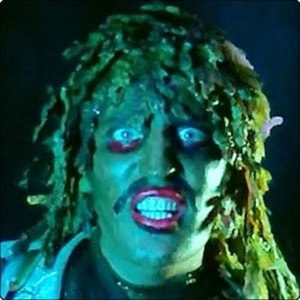
Speaker B:That is so strange because well, I mean, I'll mention it later, but in the next episode you get a better look at Zephon, for instance, and he looks exactly like the red the red guy. Yeah, he's that kind of. It's like a shaggy, a shaggy head of material.
Speaker A:Yeah.
Speaker B:Yeah.
Speaker A:Oh God. Look at that. That is a face.
Speaker B:In the— so some of these characters were in that Mission to the Unknown episode, but they were played by different people and they were slightly different. So this guy, there's a lot of publicity photos taken because it was when Verity Lambert was leaving. And so there's a lot of pictures of her with the other delegates. And that guy has got like, in the other episode, he's got like, um, things, little icicles on his face or like, not icicles, but he's got like little things like coming out of his face, like what's this or something hanging from his face. And I quite like that. I don't know why they didn't do that again.
Speaker A:I am.
Speaker B:I know that's contradictory to what I've just said.
Speaker A:Yeah, exactly.
Speaker B:But things growing out of people's faces. But I think when it's polystyrene, it's fine. Uh-oh.
Speaker A:Uh-oh indeed.
Speaker B:I had to throw away some lettuce today because it went bad.
Speaker A:Be funny if you took it off, if you took the hood off and it was all gummage.
Speaker B:The bald guys.
Speaker A:They're smart. Look at their brains. Massive heads. Uncle Festus.
Speaker B:I saw a photo this week that, um, photos of Christopher Lloyd.
Speaker A:Oh yeah.
Speaker B:We're doing like a makeup test for Uncle Fester when at first they tried to make his cheeks a bit fatter and he's look a bit more like the cartoon.
Speaker A:Yes. Okay, that's interesting.
Speaker B:I've never seen it before. It looks so different because obviously Christopher Lloyd's got very, um, distinctive, like, cheeks almost, hasn't he? Yeah, I always think Christopher Lloyd looks very much like Boris Karloff in real life. They've both got that— the same cheeks, the same sort of lines on the cheeks, the same sort of eyes.
Speaker A:Yeah, quite sunken. I suppose he looks definitely like—
Speaker B:I'm surprised he never played in a biopic or something.
Speaker A:Yeah, when he's in Dennis, he's peeling the apple. I am— in what?
Speaker B:Sorry, Dennis? Dennis the Menace?
Speaker A:The Menace, yeah. Ah, I didn't know that. He, um, he's in Suburban Commando as well. Love that. He was in the Hulk Hogan documentary that was on Netflix because he was saying Amongst many things, he would say it was a crap film, but basically saying several characters was rubbish. But hey, good fun. Great one, don't leave. Don't let the strange beings catch you. Oh, that holding hands.
Speaker B:There's a few when you listen to like to various Doctor Who podcasts and things. There's various changes in pronunciation that you, you hear a lot.
Speaker A:Yeah.
Speaker B:So one, a lot of people— oh, second episode gone. A lot of people keep saying Katrina for that character instead of Katarina.
Speaker A:Yes, Katarina. But also, I suppose that's easy done. Yeah. Uh, oh shit, I forgot what I was actually gonna say just then. Apologies.
Speaker B:Oh no, that was it.
Speaker A:Sorry.
Speaker B:No, so the the character, the the actress is called I believe Adrian.
Speaker A:Yes, I saw it in the in the credits.
Speaker B:But it's spelt like ad.
Speaker A:It's Adrian.
Speaker B:Adrian.
Speaker A:Yeah.
Speaker B:But I think it's actually I've heard it when I've heard it said it's a it's people have said Adrian. So I don't know. I don't know which one it is basically. But that you hear that as like some people say one, some people say the other. I used to think it was Adrian. But yeah, might be Adrienne Hill.
Speaker A:We can't ask her.
Speaker B:I think she's great. I've got a, I've got a, I've got a thing about 1960s actresses that died young where I become slightly fascinated with them, especially if they weren't in much.
Speaker A:Yeah, there's something quite elegant about it, isn't there? There absolutely is. And quite sad.
Speaker B:I think she's lovely, and it's a shame that Really, this is the last episode that she's in. Really, she's in a bit of episode 4, but this is basically it for the character.
Speaker A:I love this stuff anyway. As you know, I love old UK style, you know, anything '60s, '70s, even '80s. There's just a bit— there's something quite homegrown about it, isn't there? Which, you know, I think everything now kind of lacks because we're global. Now we absolutely are. It's gone a little, a little bit. You still get it a bit on some of those crappy, um, Channel 5, uh, things that go on. UK gritty dramas, as we call them.
Speaker B:This particular scene, nobody knew that Hartnell still had a hood on.
Speaker A:Amazing.
Speaker B:Because you wouldn't, would you?
Speaker A:It was me! It was me all along!
Speaker B:And they certainly didn't know that he would have static all over his wig. When did you first find out that Hartnell wore a wig? It was quite late for me.
Speaker A:Oh, I don't think I knew until— were we not at Union? I think that's when I realized, to be honest.
Speaker B:Maybe, yeah.
Speaker A:I was like, oh, okay, yeah, it's a wig. Because I saw him on Granada TV doing the interview and I was like, oh, of course, yeah, that's not— that's not him. Is it? That's not his hair. Of course.
Speaker B:I must have seen behind the scenes pictures, but because obviously in rehearsals he doesn't wear his wig and it's quite strange. But that again, that must have been quite, quite late though that I discovered.
Speaker A:I think to me, because I thought, because I had the same hair, I was like, yeah, it's easy to get that hair. Yeah, you just grow it. I get it.
Speaker B:Hmm, I think it really suits him.
Speaker A:It does, yeah.
Speaker B:And I would have liked an episode where he had a ponytail at the back.
Speaker A:I can't imagine him doing that. I know what he would say. I know what he would say. I don't think so, boys.
Speaker B:Don't be silly. Yeah, I think I'm very protective of William Hartnell.
Speaker A:Yeah, as well. I mean, I'm sure, I mean, there are things that—
Speaker B:and his legacy.
Speaker A:I mean, yeah, there's nothing that I've read particularly that aggrieves me. He did seem to— yes, he was opinionated. He did say some stuff, but nothing really aggrieves or anything bad.
Speaker B:Maybe, but you know, I can't seem to get like 100%, you know, verified on any of these. things. But I think you've just got to, you've just got to remember that he was a man born in 1908.
Speaker A:Exactly right. Sorry, when the world was different. Yeah, the world was different. And opinions, opinions are opinions. There are people's opinions. And, uh, yeah, that's all we'll say on this, on this podcast. You know, I'm a, uh, I'm a, I'm a pro wrestling fan. I can't, I can't judge anyone. You know, it turns out pro wrestlers are some of the worst people in the world.
Speaker B:I would, I would argue, well, yeah, I'd argue that he's certainly not the only Doctor Who actor to have controversial opinions or opinions that have maybe, uh, not aged well.
Speaker A:Yeah, exactly.
Speaker B:Loads of people will have. You telling me that, like, well, I'm not gonna mention any names, but the amount of people that were of his generation—
Speaker A:Coronation Street, Been loads. Yeah. Anyway, Ken's been in it a long time now, hasn't he? I was looking the other day, he's been in that Coronation Street a long, long time.
Speaker B:I am, I'm still in, I'm still watching Emmerdale week on week.
Speaker A:Oh yeah? Is it, is it, is, is it good?
Speaker B:I went to the, I went to the set and I met, I met, um, William Ashe, who plays Caleb, who was in Doctor Who. He was in episode 42. I met him. He was very nice. Um, and yeah, they had a crossover episode. Did you see that? Corriedale?
Speaker A:I did. Yeah, Corriedale. Very good.
Speaker B:So that was interesting because I don't watch Coronation Street, but my mother-in-law does, and I've got a bit of an overview of Coronation Street because I'm quite fascinated with long-running things.
Speaker A:I don't watch it now. Here we go.
Speaker B:The red guy. Look, this is it.
Speaker A:Yeah, this is it.
Speaker B:Don't hug me, I'm scared.
Speaker A:Terrifying. And I remember seeing— this is terrifying. This is old Greg, isn't it? It is terrifying. Absolutely terrifying.
Speaker B:Of course it is. Yeah.
Speaker A:Why should I arrange that 50 years be spent secretly mining to acquire this mineral only to have it stolen?
Speaker B:You want to go to a club where people wee on each other?
Speaker A:Yeah, um, that's all you see now, isn't it? That's it, done.
Speaker B:And of course it's old Greg. Yeah, that's more like it.
Speaker A:Yeah, with his eyes on—
Speaker B:what do you think of me?
Speaker A:That other guy with those middle ones look like 2 eyes that have gone cross-eyed.
Speaker B:Make an assessment.
Speaker A:Weird.
Speaker B:Imagine— I often think about watching this at the time. on a little telly. I've got a really vivid sort of image of what it would have looked like coming out of a little telly and being really—
Speaker A:If I was a kid, not knowing about—
Speaker B:not knowing anything about the future of Doctor Who, just, you know, I love it.
Speaker A:I'd be terrified. This is— this shot here is terrifying. Yeah.
Speaker B:Yeah. I know some of these things for what they are. Obviously, it's just bits of whatever, plastic or material or whatever. But some of these things are actually quite gross. And like when you, in one of the early, you know, the first Dalek serial, you see the, like they take the Dalek creature out of one of the casings and it's crawling and, you know, its claw comes out of underneath a blanket. And it's just these little things that are quite—
Speaker A:That's it gone.
Speaker B:Which is one of the reasons that this Is missing essentially because it didn't get sold abroad because the first port of call was Australia. Um, and then it got sent on around to other, um, TV stations around the world, and Australia thought it was too big, they had too many scary moments and cuts in it, so they didn't take it.
Speaker A:Crazy to think, isn't it? Especially of what we have these days. Yeah.
Speaker B:But yeah, they were certainly thinking— I mean, this is particularly in the context of the other episodes of this era.
Speaker A:It's quite—
Speaker B:it is quite dark, isn't it? Here we go again.
Speaker A:I just had a thought there. Can you imagine a really ultra-violent version of Doctor Who with the Daleks being very ultra-violent? Um, almost to the point of— I mean, I've been watching The Boys recently and the end of that. And obviously that's horrifically violent and obscene. I just, I just think there's something there with the Daleks where it could probably be ramped up a little bit these days.
Speaker B:Oh yeah, in this particular episode, I mean, we, we don't know for sure because a lot of these are missing, but it appears that a lot of the extermination effects have, um, uh, have Effects, um, after-effects that you wouldn't normally see, like scorched skin, or one of the characters melts into a puddle, all that kind of thing. So I think they were really actually making it quite gritty.
Speaker A:Oh no, they absolutely were here. I just think pushing the Daleks over time haven't really progressed. I think the last time they were ever really sinister was probably the Eccleston Dalek episode, I would say. Yeah, just with the one. That was sinister. But I think there's something they can do just to crank it up a bit. I don't know what that is.
Speaker B:The problem I always think is when they came back in the Eccleston era and they'd come from the Time War and they were completely armored and had all these amazing powers. Really, once the Time War sort of faded away, from the plot. Those Daleks should have been— like, those Daleks should have been destroyed, and then other Daleks should have come that weren't quite as all-powerful. Because as soon as you have creatures that, like, essentially can't be destroyed—
Speaker A:Yeah, it makes the whole thing irrelevant.
Speaker B:Yeah, and can do it, you know, you want Daleks to come back who are a bit more Um, you know, susceptible to various, um, things from humans, you know, and ailments.
Speaker A:Yeah, you definitely want something that's almost Cyberman-esque.
Speaker B:Yeah, like in the old days. In these episodes, you could— somebody could just push them off a balcony or something and they'd explode, you know. You don't want them to be too, like, Um, all-powerful and, you know, impervious to everything.
Speaker A:I think the— do you remember the Daleks Take Manhattan? And was that what it was called? And that episode, I think that could have gone in a really interesting direction if they'd have just leaned into it a bit more with people wanting to be Daleks and things of that nature. I think there's something— I still think there's something there. I think there's something there that just needs to be explored.
Speaker B:Yeah, I'm really annoyed that they kept those bronze Daleks for so long.
Speaker A:Yeah, I know.
Speaker B:And even though I was a bit unsure about the, what they're called, Paradigm Daleks, at first I was like, you know, they should have just had the confidence to go with it because by now they would have been a classic design and everyone would have loved it. But because they got cold feet and they're like, oh, I don't really— when they came back in subsequent episodes, they were just sort of not— they were in the background of things. And they'd like slightly reshaped them. They'd painted them more metallic-y.
Speaker A:They look great. Yeah, they did.
Speaker B:And there's a— when they've been in Big Finish stuff, there's an artist that I follow. Well, sorry, that we, our account follows on Twitter. James Johnson, I think he's called. And he's sort of— he's tweaked them perfectly. So they look the same, but they're just— the proportions are nice, metallic-y. They look great. I would have loved them to be there, but they just keep going back to them. There's no reason that they should have been in Jodie Whittaker's episodes.
Speaker A:No.
Speaker B:Bronze. They were Time War Daleks. They should have gone. They should have died out and a new batch should have come in.
Speaker A:New batch, new, new, new meaning, new things that they want to achieve. That should be where we're going with the Daleks. But yeah, just need a fresh take.
Speaker B:See, I like it here. Obviously, the Daleks can take over the universe and everyone's— they are a big threat. And yeah, the Doctor's like, Daleks! But, um, but they're not like, absolutely, this is the end of the universe. The— what, you know, it's like It is still something that they could potentially sort out, you know.
Speaker A:Yeah. Well, it's not the end of the world.
Speaker B:They're quite clever and they've got a lot of firepower, but they're not like, oh my God, this is the end of the universe. Even one Dalek.
Speaker A:Yeah, it doesn't need to be that. It just needs to be an imminent threat. I just want more fear in my, in things I watch, you know, as I get older, I really want to be Surprised by what I'm watching and watch something that that makes me go well that's different that's new.
Speaker B:Highly effective operation.
Speaker A:May I congratulate?
Speaker B:I feel a bit hypocritical sometimes because I I'd love the idea of something really unexpected in Doctor Who. Really like oh my god I can't believe that just happened but it all seems to be slightly wishy-washy with Doctor Who. It's like. big things will happen, but they won't be good things. They'll just be annoying things that ruin—
Speaker A:They're annoying things that don't make sense or aren't really what you want. And I'm okay with some of that. I'm like, okay, I'll let that slide. I'll let the bioregeneration slide. Absolutely. That's fine. That's okay. Whatever it is.
Speaker B:But yeah, I didn't necessarily mind the timeless child thing. It's just that it's the way that it was, that the dialogue was, it was far too clunky and it was far too This was— this is what happened in the 1970s and '80s and '90s, and I'm going to mention it all, you know. Um, it wasn't like an— it wasn't necessarily an original idea. It was an idea that was taken from something that had happened 50 years ago, you know.
Speaker A:Yeah.
Speaker B:Uh, but I would have loved it to have gone on a complete tangent.
Speaker A:Whoa!
Speaker B:Oh my God, I can't believe that this is a new era, you know. There's a new dawn.
Speaker A:Everything we knew has been Yeah, and maybe they should have leaned into that more because they didn't. They did not do that. So as you say, yeah, it's wishy-washy. So everything's a bit, oh, we're starting again, but we're not really starting again.
Speaker B:And there's always the chance of things being undone by the next, you know, showrunner as well, isn't there? Yeah, things being ignored, or there's no like, okay, well, we're, you know, I mean, actually, I say that, Russell T. Davies Has not ignored the the timeless child stuff, so fine.
Speaker A:No, he hasn't. But anybody could, and he has dealt with it quite sensitively and the flux.
Speaker B:Yeah.
Speaker A:But I don't know if I was in charge.
Speaker B:It just seems that it's all a bit like well, we don't really have to mention that, so we can just carry on normally, and that can just be something that happened once. I would just like something to.
Speaker A:Everything was a dream.
Speaker B:Yeah, like, I mean, you wouldn't have that with, with like, oh well, you know, yeah, William Hartnell turned into Patrick Troughton once, but that was just the thing that happened, you know. You're like, okay, well, this is what happens now with the Doctor, you know, this is the new thing. Yeah, he changes his face.
Speaker A:Exactly.
Speaker B:It's not just an anomaly, it's something that's fundamentally changed the lore of the program.
Speaker A:Yeah, and that's okay because there's no reason why he couldn't be the Doctor, go back to an old Doctor, which you've seen has happened, or change, or go backwards, forwards, all that stuff. Because that's fine, that's absolutely fine. It can be whatever it can be.
Speaker B:Have you seen that new thing with Jo Martin? The sort of that thing that they keep doing, the multimedia story thing?
Speaker A:Yeah, she's dressed up.
Speaker B:And I was looking at her. Yeah, she was dressed up. She's got a new variation of the costume, and I was just like, I was like, oh, imagine twiddling your thumbs about the Christmas special and about who's good when you've got Jo Martin just sat there.
Speaker A:It is a bit strange. It's like, I kind of think, yeah, why don't they?
Speaker B:What a thing that could have happened. I'm annoyed that when she was in that episode of Flux, um, it kept changing between her and Jodie. It would have been nice to see a whole episode of just her.
Speaker A:Yeah, we—
Speaker B:And then come back to Jodie.
Speaker A:We still might.
Speaker B:Later, but instead of like— instead of like, oh well, it's— this is the past, but it's sort of being remembered as if it's Jodie Whittaker now.
Speaker A:Yeah, it's interesting, isn't it? We still might get her.
Speaker B:Do you know, in the same play that I was in with, uh, Ralph Little, I was also in that play with Rashenda Sandal.
Speaker A:Oh, right. Wow.
Speaker B:Who you will— well, obviously you know who she is.
Speaker A:Yeah.
Speaker B:Um, but yeah, of course we all remember her character name. Azure.
Speaker A:That's it. I don't remember her character name.
Speaker B:Yeah, she was, she was Azure. So, God, if I only had— was still in contact with her, I could have said, you're the fucking Doctor Who villain.
Speaker A:Amazing. That's amazing.
Speaker B:Well done.
Speaker A:Was she nice?
Speaker B:She was very nice, and she wasn't— she was one of the ones that was, um, she was one of the ones that wasn't quite a name in those days. Now it'd be different, but so she was much more like— oh well, the bit that I was in was with her. I was— I played like a steward that had to take her away from something.
Speaker A:Oh wow, that's great. So you were really in the scene with her?
Speaker B:Yeah, um, because it was a play about snooker because it was at the Crucible. So I played a bit where she sort of burst in and I had to play a steward who dragged her out. So yeah, we were quite close behind stage, and I was like, oh my God, it's you! And now I'm seeing her in everything. It's great. I'm so— yeah, but oh, weirdly, so we— me and you did, um, a short scene of a play and I can't remember what it was called. But I had my hands nailed to the table.
Speaker A:Yep, I remember that. That's the one I mentioned earlier when in rehearsals we forgot our lines.
Speaker B:Oh, okay. So the guy that wrote that wrote the play
If it's brain, or brawn rather, versus brain, then god help both of us...
ecorded in a drunken haze three months ago, this bang up-to-date, finger-on-the-pulse commentary of the recently re-discovered episodes of The Daleks' Master Plan - The Nighmare Begins and Devil's Planet with the no so recently re-discovered Day of Armageddon in the middle.
We discuss the episodes in minute detail, with a forensic analysis of every facet of the story from script to screen and beyond.
No not really, we forgert they're on for most of it. Enjoy!
Find out more at https://pressplaypod.pinecast.co
This podcast is powered by Pinecast.